The Hidden Cost of Your Tyres: Why Roadside Checks Are Finding More Defects
Recent DVSA enforcement data reveals that tyre condition remains the leading mechanical defect on UK roads, highlighting a critical safety gap for local drivers.
The Silent Danger Beneath Your Car
As we navigate the autumn months here in Gainsborough, the focus for many drivers shifts to keeping their engines running smoothly and their heaters working. However, recent enforcement data from the DVSA has shone a spotlight on a much more fundamental issue that often goes overlooked until it is too late: tyre safety. According to the latest roadside inspection figures, tyre condition remains the single most common mechanical defect identified on vehicles, far outpacing other issues like emissions or brake system faults.
Why Tyres Are Taking the Lead in Defects
It is easy to treat tyres as a 'fit and forget' component, but the reality is that they are the only point of contact between your vehicle and the road. The recent data from April to June 2026 shows that tyre-related issues are not just a problem for heavy goods vehicles; they are a recurring theme across the board. Whether it is uneven tread wear, sidewall damage from hitting potholes, or simply running on pressures that are too low for the current road conditions, these defects are leading to an increasing number of roadside prohibitions.
At MotoMendz, we often see vehicles come in for routine servicing where the tyres are dangerously close to the legal limit. Many drivers are unaware that modern vehicle complexity—such as the increased weight of hybrid and electric models—puts significantly more strain on tyre compounds than the cars of a decade ago. If your tyres are not rated for the weight and torque of your specific vehicle, they will degrade faster, compromising your stopping distance and handling.
The Link Between Maintenance and Insurance
It is not just the DVSA you need to worry about. With the insurance market currently facing pressure due to rising repair costs and vehicle complexity, insurers are becoming increasingly diligent about vehicle condition. If you are involved in an incident and your tyres are found to be below the legal tread depth or otherwise unroadworthy, it could complicate your claim significantly. We are seeing a trend where the cost of maintaining a vehicle is being weighed against the rising premiums of the current market; keeping your tyres in top condition is one of the most cost-effective ways to ensure your vehicle remains safe and your insurance remains valid.
Practical Steps for Gainsborough Drivers
You don't need to wait for your next MOT to check your tyres. Here is what we recommend for all our customers:
- Check your pressures monthly: Modern tyre pressure monitoring systems (TPMS) are great, but they often only trigger when a tyre is significantly under-inflated. Use a reliable gauge to check your pressures when the tyres are cold.
- Look for uneven wear: If your tyres are wearing more on the inside or outside edges, it is a clear sign that your wheel alignment is off. This not only ruins your tyres prematurely but also affects your fuel efficiency.
- Inspect the sidewalls: Look for bulges or cuts, especially if you have recently navigated the rougher road surfaces around Lincolnshire.
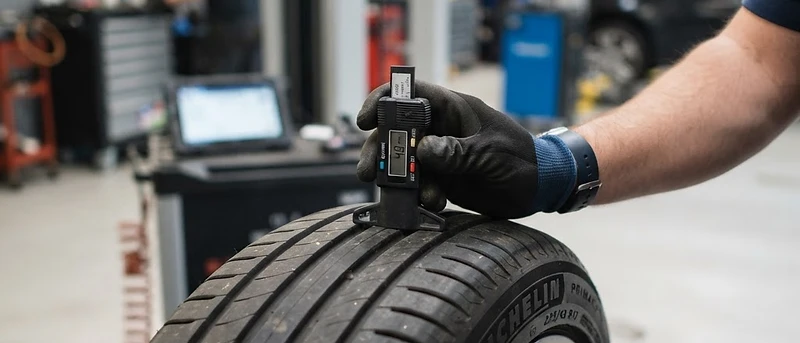
- Don't ignore the 'penny test': While a tread depth gauge is more accurate, ensuring your tread is well above the 1.6mm legal limit is vital for wet-weather grip as we head into winter.
If you are ever unsure about the condition of your tyres or notice a change in how your car handles, don't hesitate to drop by the garage. A quick check now can save you from a roadside prohibition or, more importantly, keep you and your family safe on the road.
Need a hand with your vehicle?
Book servicing, MOT repairs, diagnostics and more at our Gainsborough workshop.