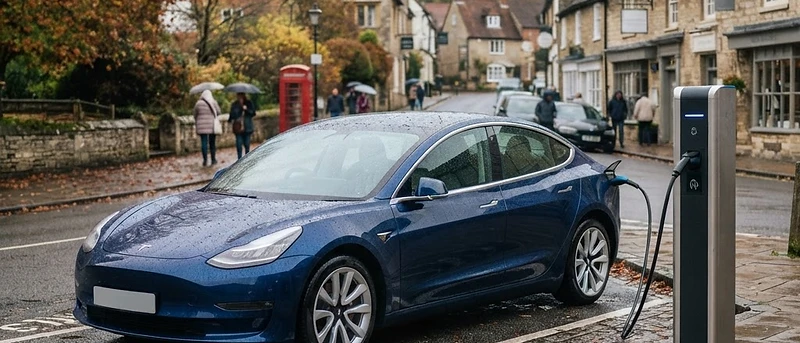
The 2026 Autumn Budget: What the New EV Tax and VAT Changes Mean for Gainsborough Drivers
With the dust settling on the Autumn Budget 2026, we break down the upcoming pay-per-mile tax for electric vehicles and new VAT rules on public charging.
Navigating the New Motoring Landscape
The recent Autumn Budget 2026 has brought a wave of significant announcements that will reshape the motoring landscape for drivers across Gainsborough and the wider UK. While the extension of the fuel duty freeze until July 2027 provides a welcome reprieve for those running petrol and diesel vehicles, the government has simultaneously set out a clear, albeit challenging, roadmap for the future of electric vehicle (EV) ownership.
The Shift to Pay-Per-Mile Taxation
Perhaps the most significant development for the growing number of EV owners in Lincolnshire is the confirmation of a new pay-per-mile tax system. Starting in April 2028, the government intends to implement this new duty specifically for electric vehicles. The rationale behind this move is to address the long-term decline in fuel duty revenue as more motorists transition away from internal combustion engines. For those currently driving or considering an EV, this represents a fundamental shift in how road usage is taxed. To help drivers prepare, the government has promised a new 'mileage estimation tool' to be launched ahead of the implementation, allowing motorists to calculate their potential annual costs.
VAT Changes for Public Charging
Another critical update concerns the cost of charging away from home. As of 1 November 2026, legislation clarifies that public and workplace EV charging will be subject to a 20% VAT rate. This is a vital detail for any driver who relies on the public charging network rather than a home wallbox. At MotoMendz, we understand that the convenience of public charging is essential for many local commuters, and this tax adjustment is something every EV driver should factor into their long-term running costs.
Looking Ahead: Grid Connections and Tariff Porting
It is not all about increased costs, however. The Budget also included funding aimed at improving grid connections, which the government claims will help reduce household energy bills. This is a positive step for those who charge their vehicles at home, as lower domestic energy costs directly translate to cheaper 'fuel' for your EV. Furthermore, the government is establishing a 'tariff porting' taskforce. The goal is to explore technology that would allow drivers to use their specific home electricity tariffs even when plugged into local public charging networks. If successful, this could significantly level the playing field between home and public charging costs.
What This Means for Your Vehicle Maintenance
While these policy changes focus on taxation and infrastructure, they serve as a reminder that the automotive world is evolving rapidly. Whether you are driving a traditional petrol car, a hybrid, or a fully electric vehicle, staying informed about these shifts is just as important as keeping up with your routine servicing. As we move toward 2027 and 2028, ensuring your vehicle is running at peak efficiency—through regular brake checks, tyre pressure monitoring, and diagnostic health scans—remains the best way to manage your overall cost of motoring. If you have questions about how these changes might affect your specific vehicle or if you need a pre-winter health check, the team at MotoMendz is always here to help.
Need a hand with your vehicle?
Book servicing, MOT repairs, diagnostics and more at our Gainsborough workshop.